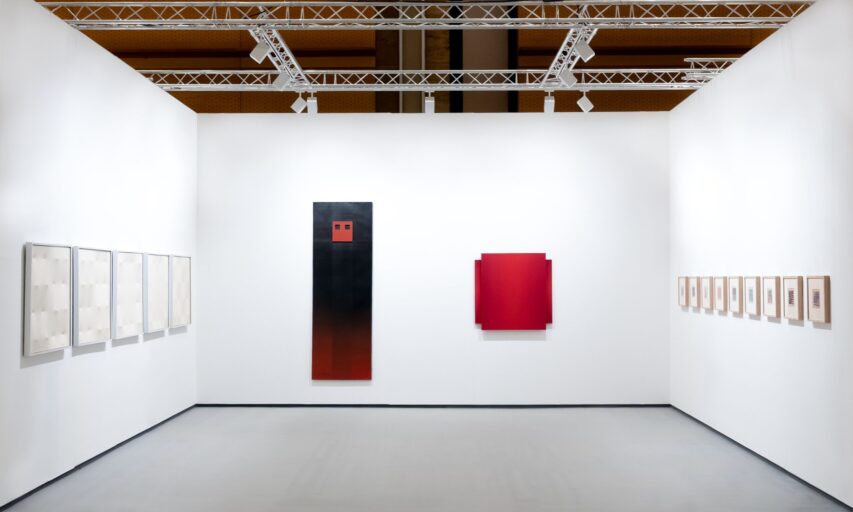
Ames Yavuz is pleased to debut at Frieze Seoul with a solo booth by Myanmar-artist Po Po. A pioneer in conceptual art, the gallery will feature significant and never-exhibited-before works by the artist created between 1986 to 1990 that challenge accepted art modalities both historically and of the region.
The presentation is located at the new Spotlight sector of the fair, curated by Wonseok Koh (director of Line Cultural Foundation). Spotlight showcases overlooked figures, evolving practices and significant early works by established artists in art-historical narratives beyond dominant Western canons.
Po Po (b. 1957) is known for his conceptual and abstract works influenced by six decades of political struggle, isolation and censorship in Myanmar. Not withheld by a shortage of resources, his breadth of mediums reaches across performance, installation, painting and beyond. Rooted in an amalgamation of Buddhist core concepts regarding spirituality and Western philosophy, Po Po ruminates on life’s most fundamental questions deeply. His queries range from universal concerns such as desire, death and power, to those of semiotics and aesthetics, and under close inspection, one observes that underpinning his entire practice is Myanmar’s fraught history. In coded visual language, Po Po frames and challenges the country’s socio-political landscape through an idiosyncratic interpretation of his environment.
It is impossible to quantify the sheer impact of the isolation and totalitarian rule of Myanmar on its citizens. Like so many artists of his generation, Po Po struggled with a lack of resources, direct and indirect censorship and a general societal resistance against experimental practices. Amongst the first Myanmar artists to embrace the modes and methods of conceptual art in the late-1980s, Po Po joined the notable Gangaw Village Art Group. Founded by the students and graduates of the Art Centre at the Rangoon Arts and Sciences University (now Yangon University) in 1979, the collective provided crucial support to experimental practices in Myanmar.
Our presentation at Frieze Seoul brings together three series conceptualised by the artist between 1986 to 1990.
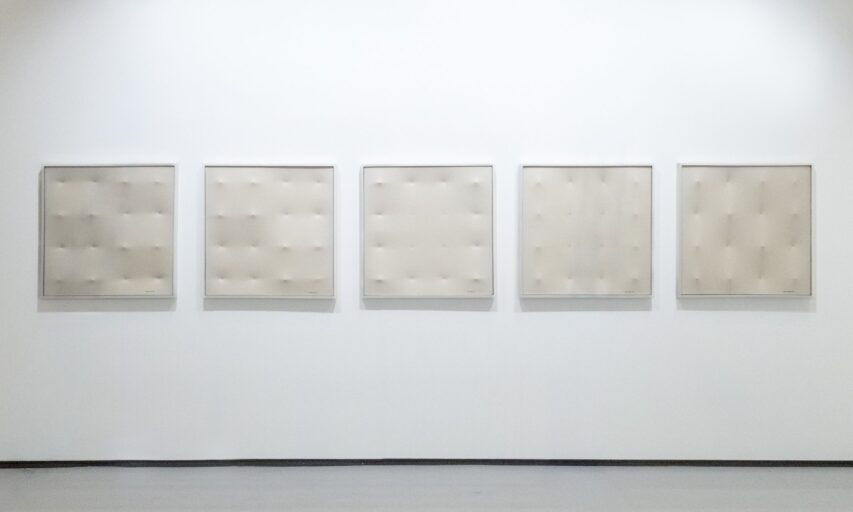
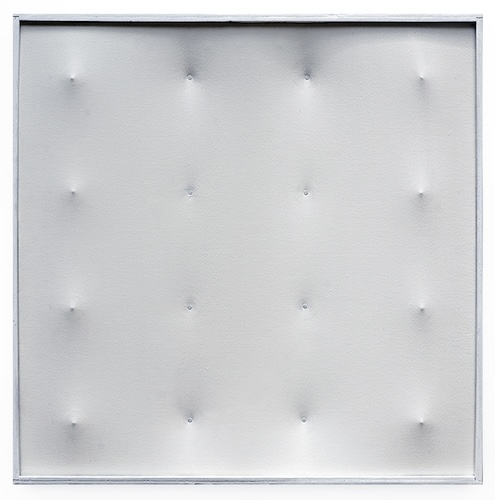
In the Painting for the Blind (1986, reconstructed 2015) series, blank canvas surfaces are mottled with concave and convex dents, created by protruding nails which mimic the raised ridges of braille, in an exploration of tactility and rhythm. The negation of visual representation and heighted physicality of the canvas invites viewers to reconsider the very notion of painting. Here, the subject of the work is reframed as the physical mutations of the surface itself, challenging preconceived expectations of what a painting and representation at large should be. Painting for the Blind was part of Po Po’s first solo exhibition, Untitled, in 1987, held at Myanmar Artistic Association Center, Yangon, which presented a series of experimental works exploring both the limits and conceptual potential of painting.
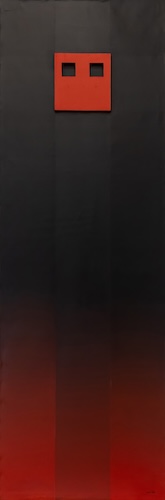
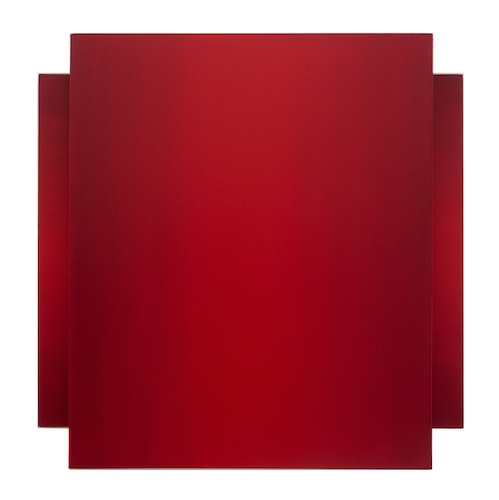
Anchoring the booth will be the significant work, Encounter of Death (1986) from Po Po’s aforementioned 1987 show. Austere, geometric and rendered in the artist’s signature gradated palette of red and black, Encounter of Death is a tall rectangular work, depicting what resembles a cross at its centre, headed by a skull-like form. Referencing the codification of visual and written languages, the work displays the artist’s early interest and exploration of semiotics, underpinned by the consequences of the brutal political upheaval in 1980s Myanmar.
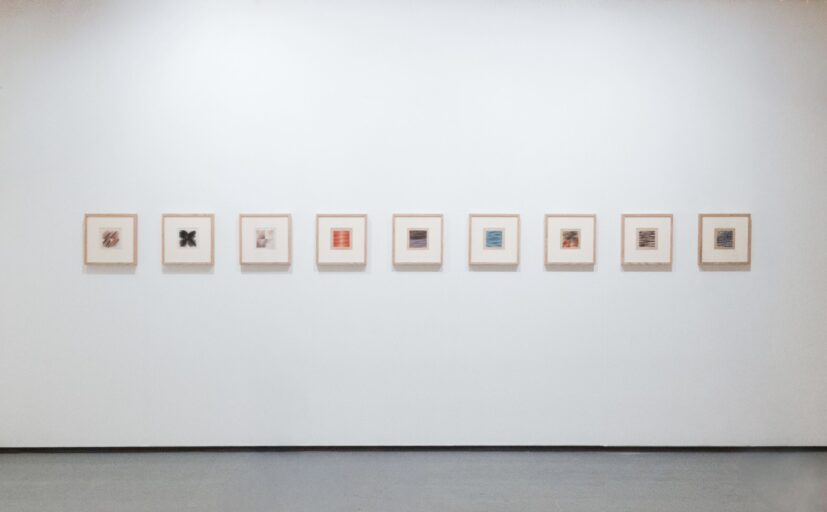
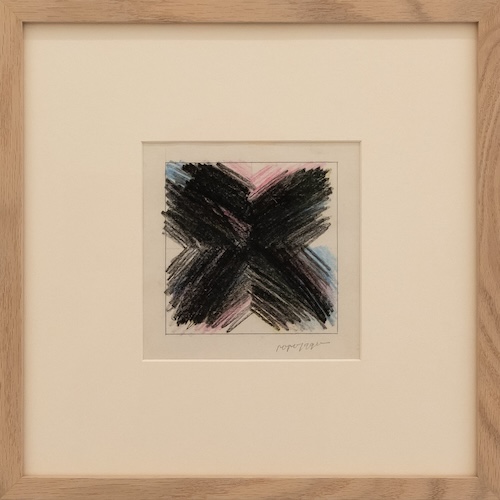
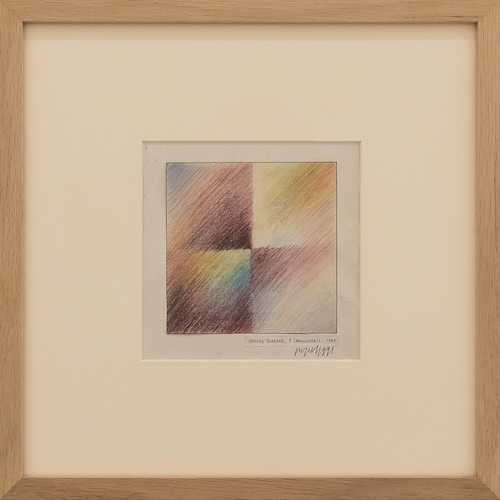
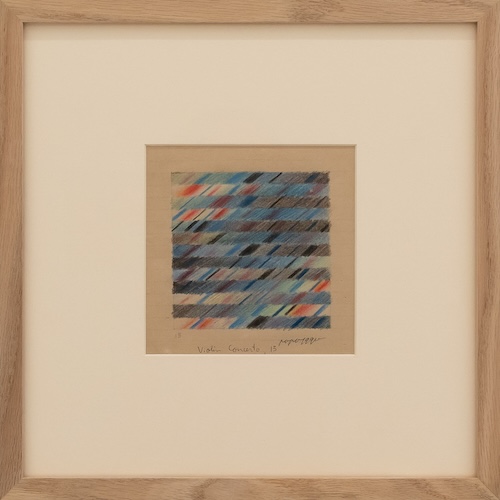
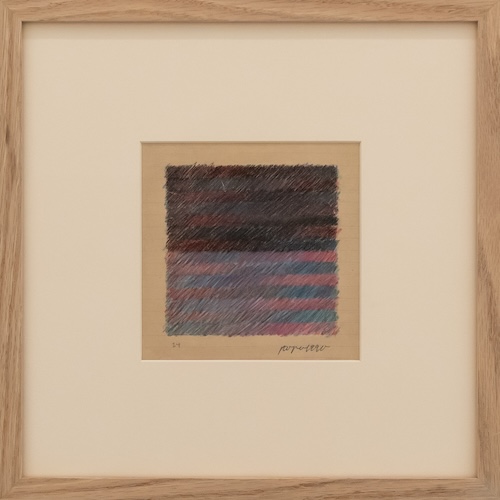
A year after his first solo show, Po Po famously declared painting “dead”. This followed the 8888 Uprising in Myanmar where a nationwide wave of peaceful protests challenging the prevailing military regime was met with extreme brutality, leading to thousands of deaths. The event saw the disbanding of the Gangaw Village Art Group and left Po Po disillusioned, believing that traditional canvas was too passive of a medium, incapable of meaningfully engaging with reality. During his ten-year-long hiatus from painting and exhibiting, Po Po sketched and conceptualised numerous works on paper, forming what he calls his ‘miniature paintings’ which will be displayed in our booth. Created between 1990 to 1993, these small works rendered in colour pencil encapsulate his conceptual explorations throughout his decade-long hiatus.
Frieze Seoul marks Po Po’s return to South Korea since his participation in the 2010 exhibition Emerging Wave: ASEAN-Korea Contemporary Photo Exhibition, GoEun Museum of Photography, Busan, and the 2000 Gwangju Biennale.