“No, I don’t [understand the conditions of the world in which I live]. But now I am going to try.
I am going to see if I can make out who is right, the world or I.”
– Nora, Act III, A Doll’s House
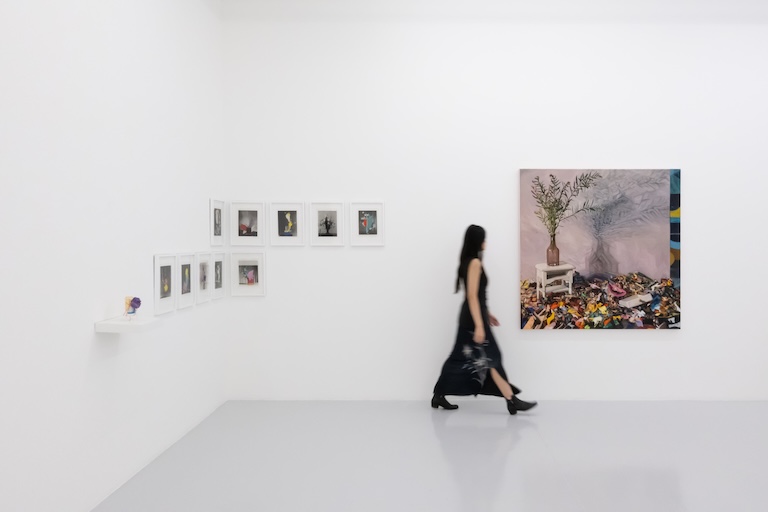
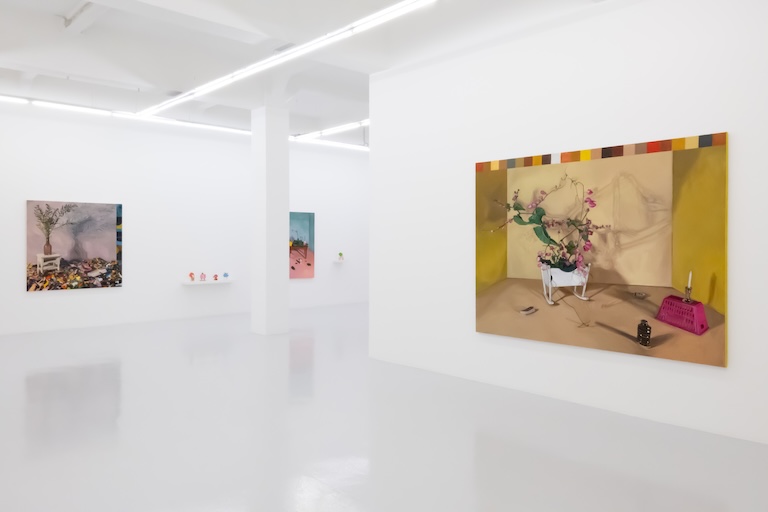
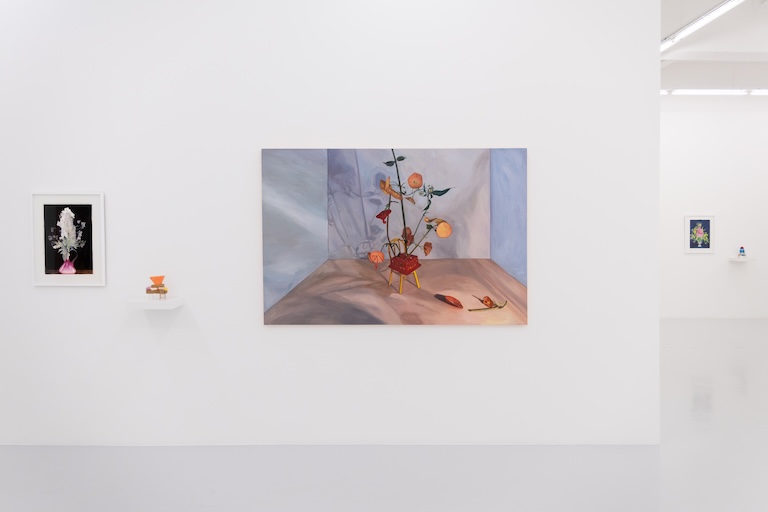
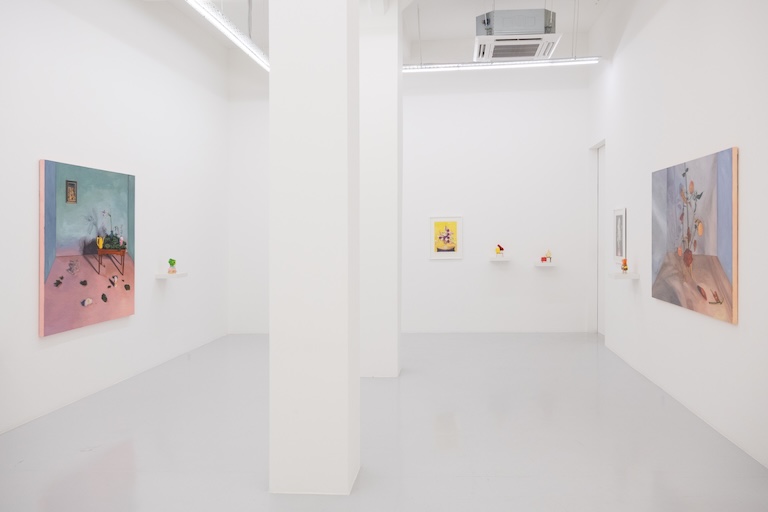
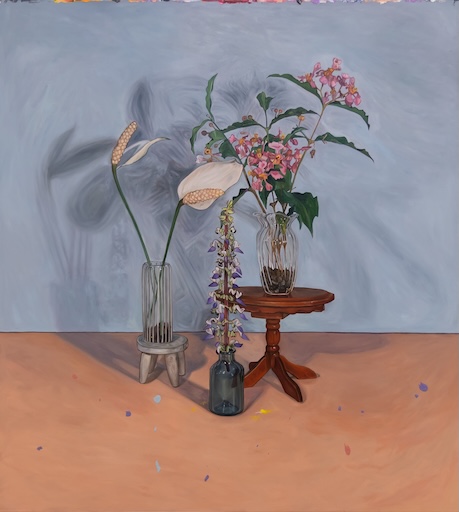
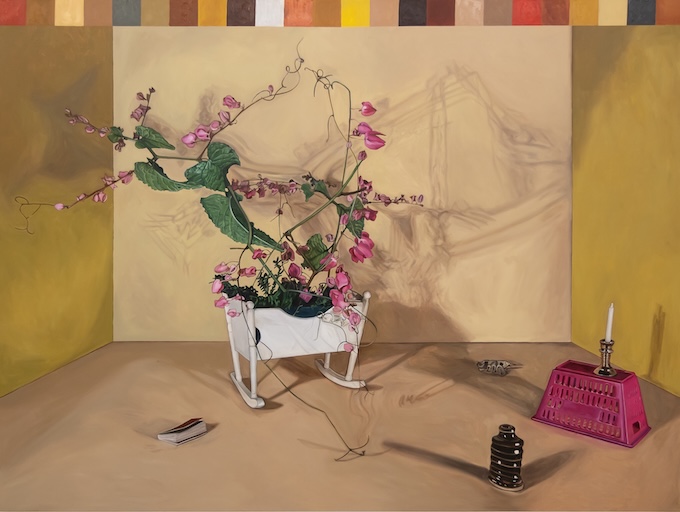
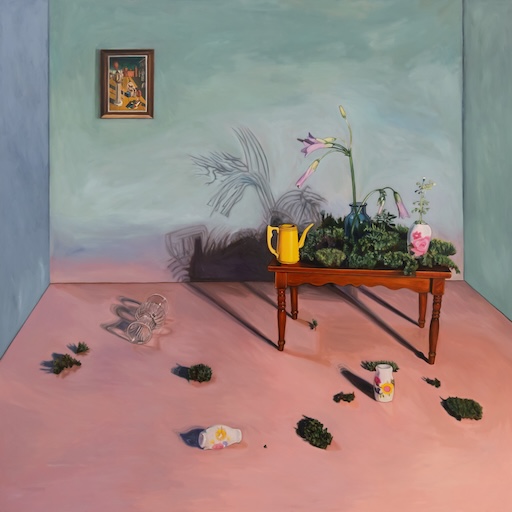
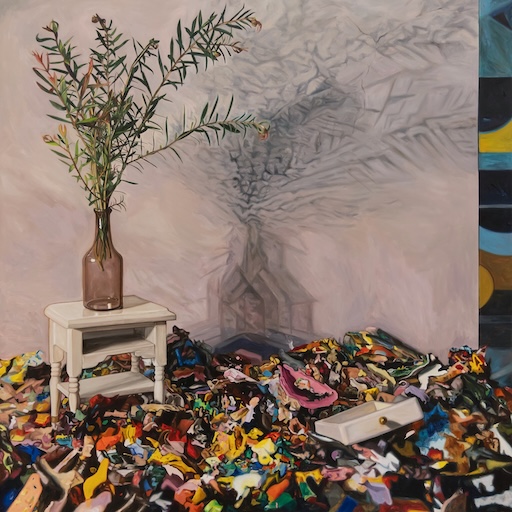
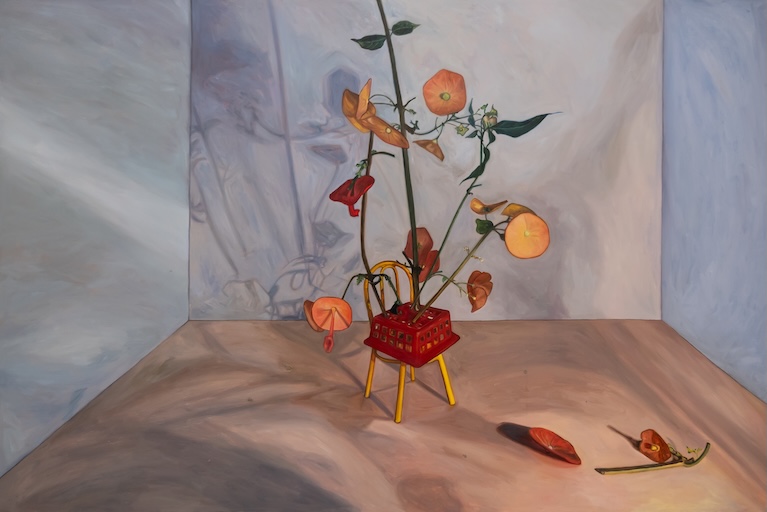
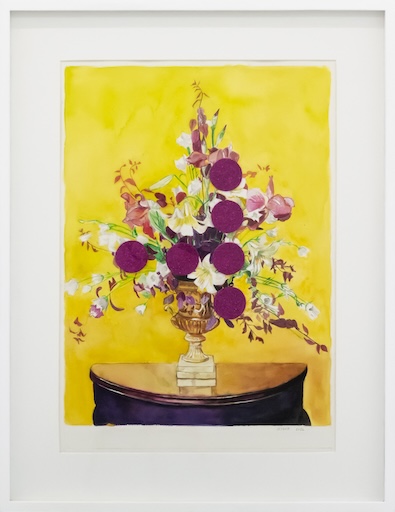
The cadena de amor outgrows the whitewashed cradle it’s perched on. Its tendrils reach out towards pale yellow walls; its bright pink to purple blossoms eagerly search for the sun. Timid lilac lilies on a tiny glass vase face the mosses that overpopulate the varnished table. A trio of white anthurium, purple mayana, and blush-colored banaba prop themselves on glass vessels, directing their faces to the viewer as if to have their photograph taken.
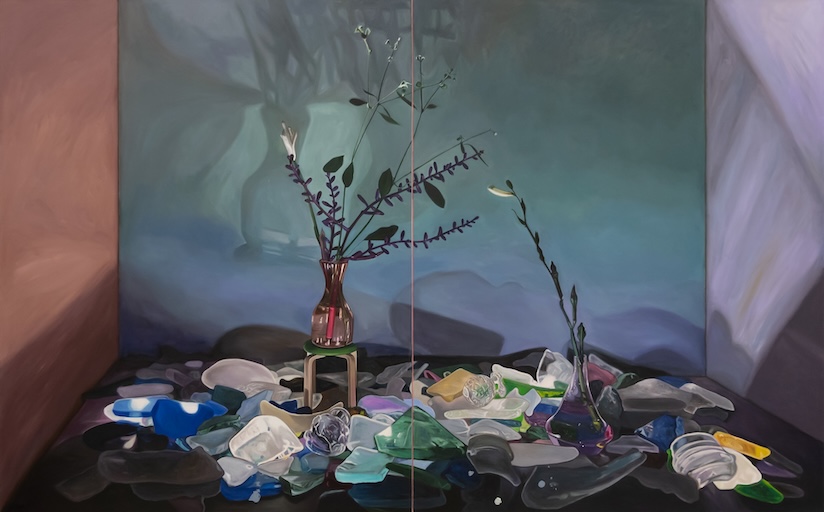
The rendered shadows from all these flowers settle softly onto the blank, windowless walls, creating organic yet haunting patterns in the large canvases. The tension between the flower–an object that grows and wilts–and the inanimate perennial toy miniatures that surround them is not lost on Yasmin Sison. It is in these enclosed spaces that she contemplates a world outside by creating compositions from articles of imposed femininity as they are held abidingly indoors.
Sometime in the late nineteenth century, flowers were deeply intertwined with female portraiture and etiquette. This rise in floral femininity depicted their subjects as innocent in every sense, rendering them dependent and acquiescent. By directly correlating the feminine virtues to flowers, qualities such as grace and beauty become means to control women amidst the rise of the feminist movement. The idea of the feminine has since broadened, but the imbued characteristic that seeks to limit the female sex remains in its floral counterpart.
In a similar vein, dollhouses have emerged as an extention of the miniaturist movement, rising around the same time, with small-scale replication becoming a means of display and pedagogy. The scaled objects made for world-building evolved towards a means of teaching the domestic. As homemaking is historically a labour taught to women, the ideals of the home and the objects made for it are kept largely interior.
By juxtaposing these two objects of societally imbued femininity and domesticity, Sison forms both an existential and a feminist critique of the situations outside. Plants that were once objects of the exterior recontextualise the interior space by reorganising the tools within the home at their disposal. The hortus conclusus now moves away from the docile and submissive and towards a commanding contemplation that seeks an organic order from the outside world that is held at a breakpoint.
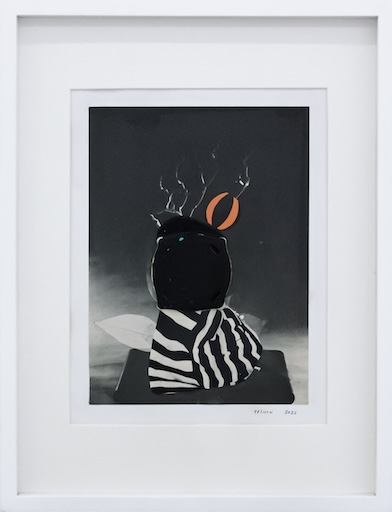
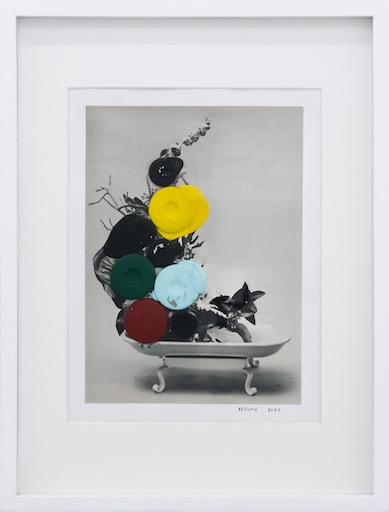
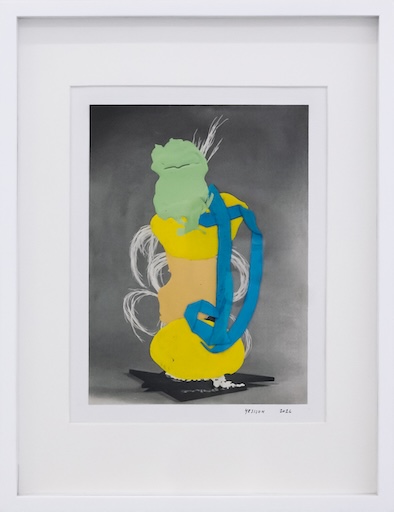
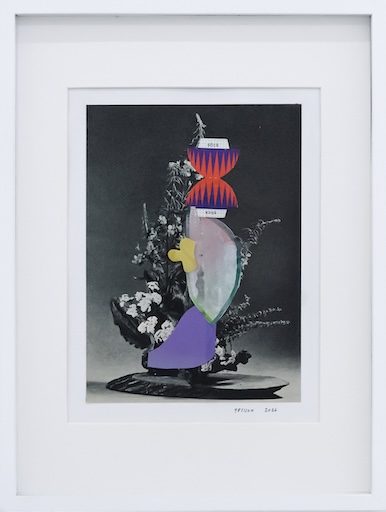
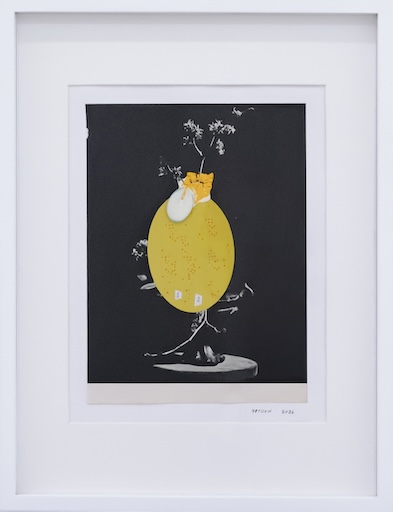
In her collages, she contrasts black-and-white images taken from vintage instructional books for floral arrangement with vivid acrylic swatches of teal, yellow, and red as if subverting the perpetuated ideals that render women palatable. Play and whimsy are evident within these works as pops of colour partially obscure prescribed visions of control. These characteristics that were once considered gamine now become quiet retaliations against strict societal confines.
String and adhesive, which are tools characteristic of the artist’s repertoire encase a sense of melancholy. Pliable and vibrant clay, papier-mâché, and resin contorts and consumes tiny furnishings, creating small statues of domestic unrest: a remembrance of how women hold everything together despite crisis. Through her pygmy interpolations of an internal life, conglomeration becomes improvisation; play becomes revolution. The manner in which the artist approaches her work has always been a dissent to how women are constantly taught to be.
In this current exhibition, Sison explores a pensive girlhood that persists in spite of the external affronts that trouble the enclosed space. The worldly maturation that comes from her decades-long relationship with her dollhouse series. She contemplates how an ingenue would confront signifiers of the feminine that ask women to be both immortal and impermanent in such trying times.
The strain that exists between the demands for both eternal youth and constant growth may seem like a sombre shift from her usually joyful and gamine compositions that typically depict togetherness and boundedness in her built environments. It may seem childish–escapist even–to even attempt to engage in leisure in such uncertain times. But for an artist in constant flux, Sison ultimately shows us that even introspective play is a means to participate in a world we are deeply trying to disengage from.
— Dondie Casanova