their flesh, a field is a group presentation with Sarah Drinan, Audrey Lukban, Monica Rani Rudhar, Julia Trybala, Apichaya Wannakit and Kaylene Whiskey.
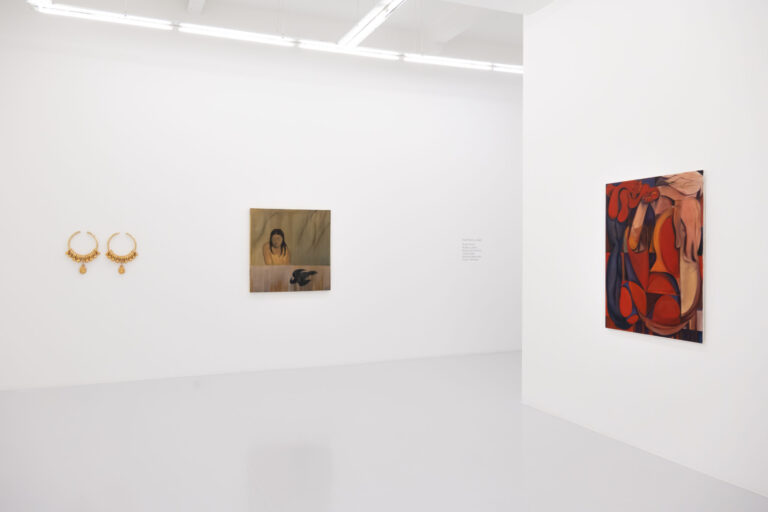
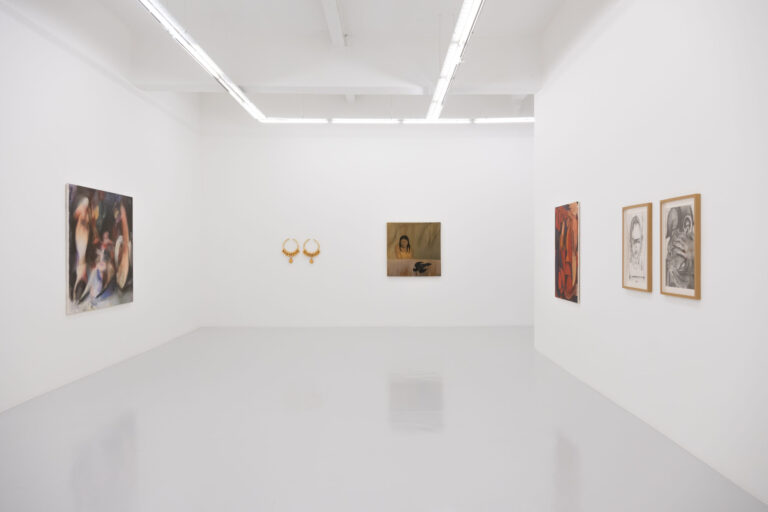
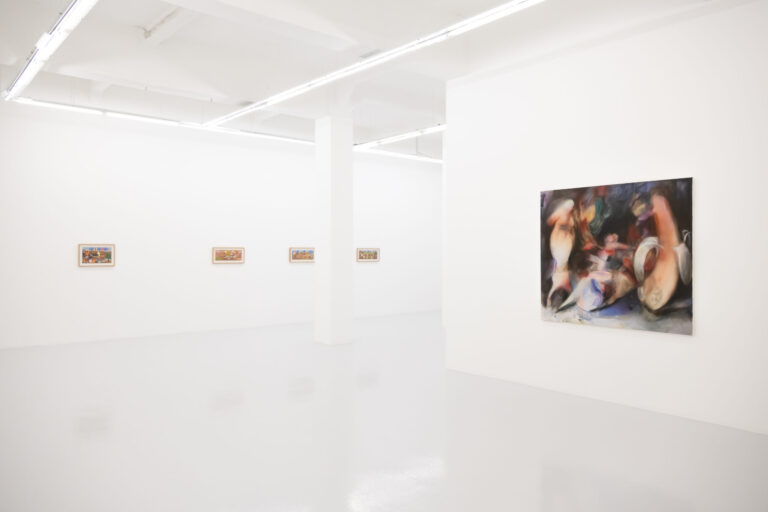
Alive, tender and ever-evolving, this exhibition explores and considers the body as a site of intimacy and terrain. It takes flesh as a porous living geography: both as a containment of memory, histories and experience, and as a vast uncontained emotive landscape. Bringing together artists across Australia, Thailand and the Philippines, it questions what it means to occupy a body in space – whether psychological or tangible.
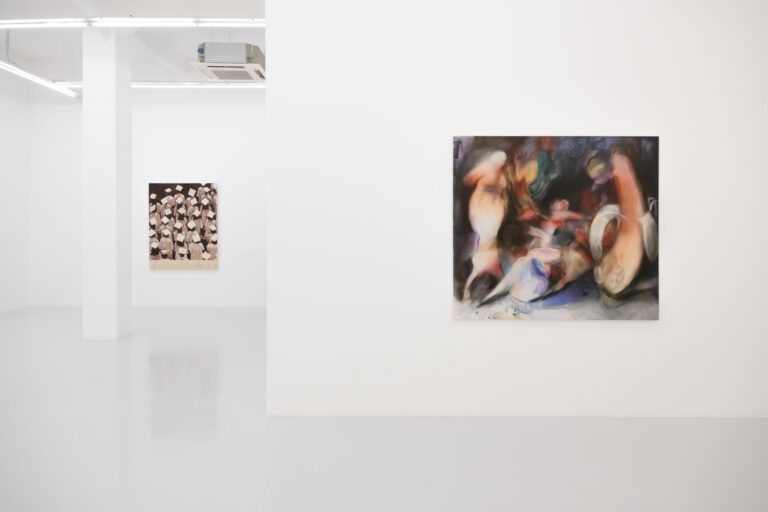
Sarah Drinan, Julia Trybala and Apichaya Wannakit present new paintings that explore the vulnerabilities and psychology of being through their depiction of the human figure as a topography of expansive emotional geographies.
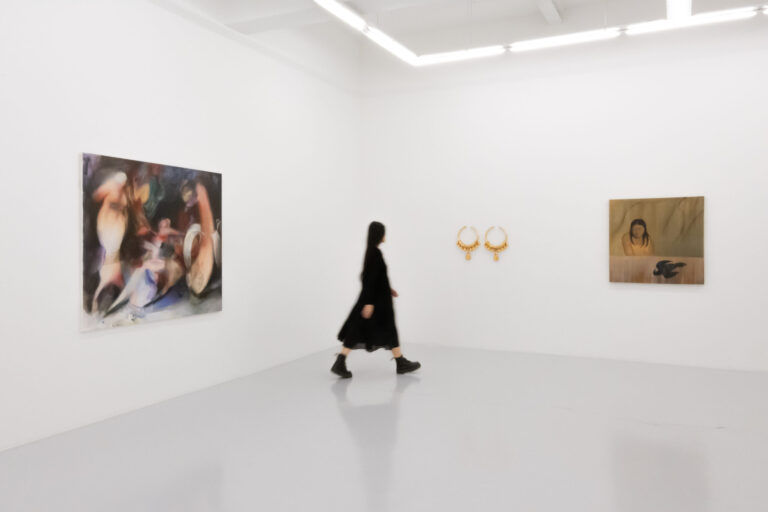
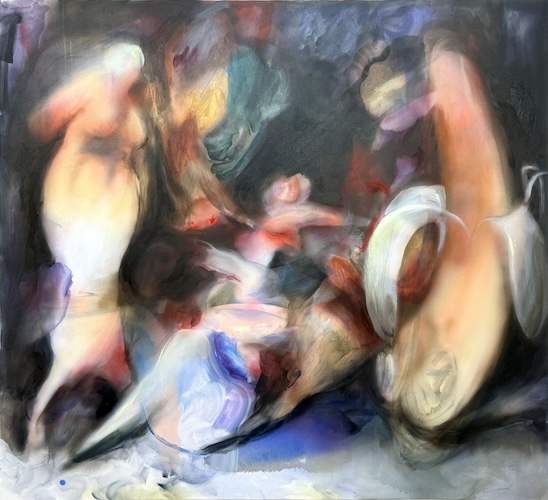
Drinan’s work explores the complexities of the body — its vulnerability, desires, unease, resistance, and messiness. Drawing on her background in mental health occupational therapy and the rich history of figurative painting, Drinan explores the intangible nuances in treating the body as a site of physical and emotional experience, shaped by narratives, systems, and environments. Her fleshy compositions appear fluid and shifting, evoking a state of transcendence — bodies in flux, oscillating between the human and mythical. In The play that was taken seriously, Drinan examines connection, play and desire emergent with the world.
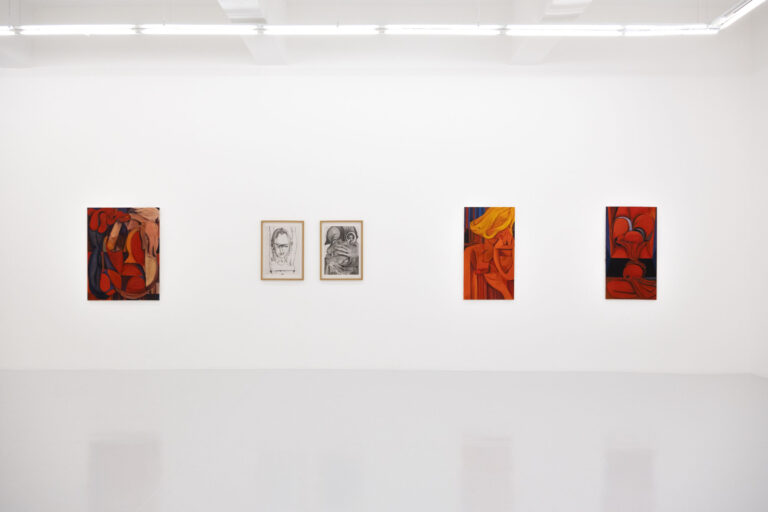
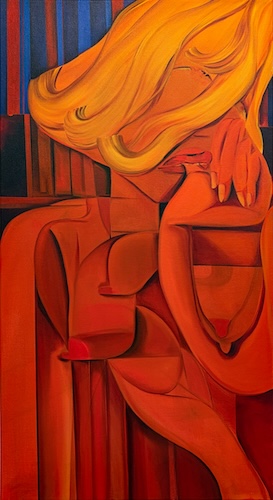
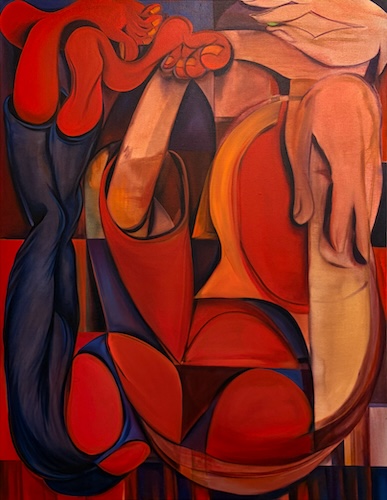
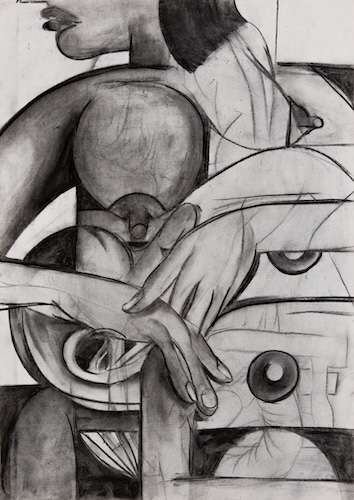
Trybala’s new oil paintings and charcoal drawings are informed by the sensation of inhabiting a body in relation to oneself and others. Through compositional structure and deliberate colour, she uses the medium to capture both nurturing and grotesque characteristics of touch, pursuing a form of sinuous harmony capable of holding intimacy, psychological tension, and fragmentation in equal measure. She renders her figures within a lens of deep intimacy and tenderness, with their identities wrapped as unstable and perpetually recomposing to explore broader themes of desire, longing and detachment.
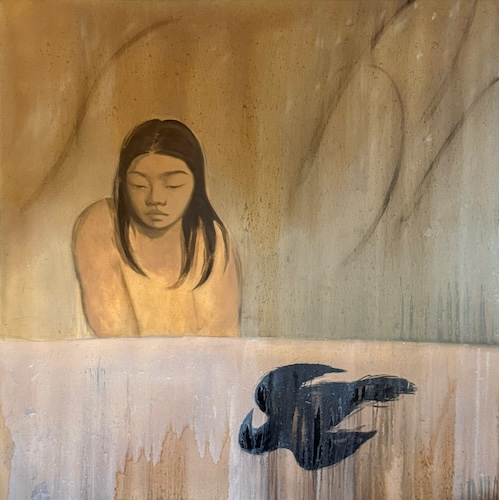
Wannakit’s work are dreamy contemplations on the many threads that weave a being. Memory, geography and cultural and societal norms all intersect in her compositions, blending with personal histories and folklore to draw forth quiet spaces for reflection. Though rooted in self-portraiture, Wannakit’s paintings betray a distance between herself and what she represents. Her figures are often surrounded by various symbolic emblems, caught at the threshold between different times and realities, evoking subjective impressions and memories left by events, people, and objects rather than literal depictions. In doing so, she constructs an elusive world of its own liminal interiority.
Working across sculpture and painting, the works of Audrey Lukban, Monica Rani Rudhar and Kaylene Whiskey trace the relationship between the body with cultural identity and socio-political histories.
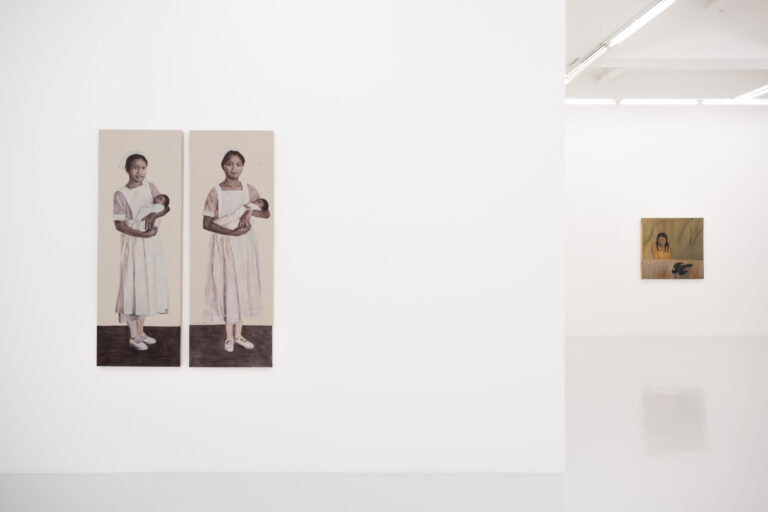
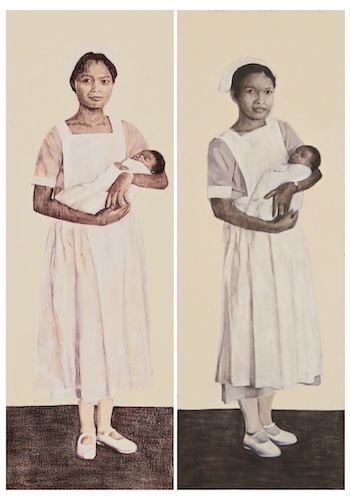
Lukban’s multimedia practice explores diasporic and domestic experiences, rooted in her own personal experiences of short-term migration. Her paintings To be and Recurrence are centred on the Filipino diaspora, in particular women who occupy the roles of nurses or domestic labourers overseas. Exploring ideas of exported care, and the irony of the Filipino diaspora building the countries that do not ultimately belong to them, her works interrogate the tension between personal choice and structural obligation and how people are shaped by broader legacies of migration and systems of power.
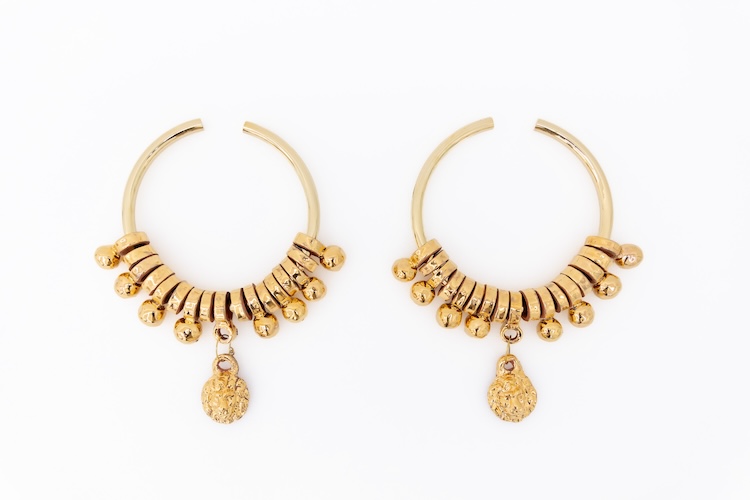
Rani Rudhar’s sculpture, Lion Hoops 1 similarly explores longing and the tension between connection and loss tied to cultural identity. Born to Indian and Romanian migrant parents, Rani Rudhar reclaims fragmented oral histories to restore familial rituals and resist cultural erasure. In Lion Hoops 1, she draws on two personal mementos: a lion head ring gifted to her father when he embarked on his journey to Australia from India; and earrings the artist received as a baby from her aunt and on her 30th from her parents. These intimate objects carry stories of migration, love, loss and belonging; by recreating palm-sized family adornments as large-scale totems, she gives physical form to family history. Crafted in painstaking detail from brass and terracotta and gilded in lavish gold lustre, their materiality echoes the fragile, yet enduring nature of the stories imparted through objects when exchanged between the hands of generations.
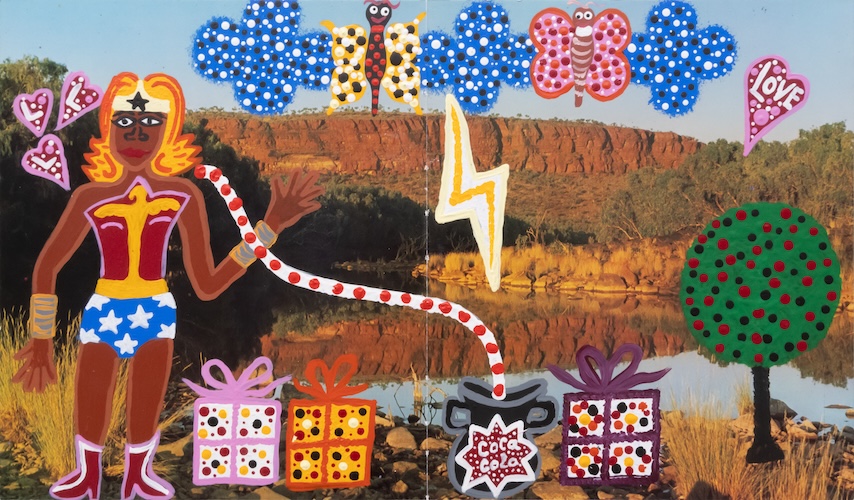
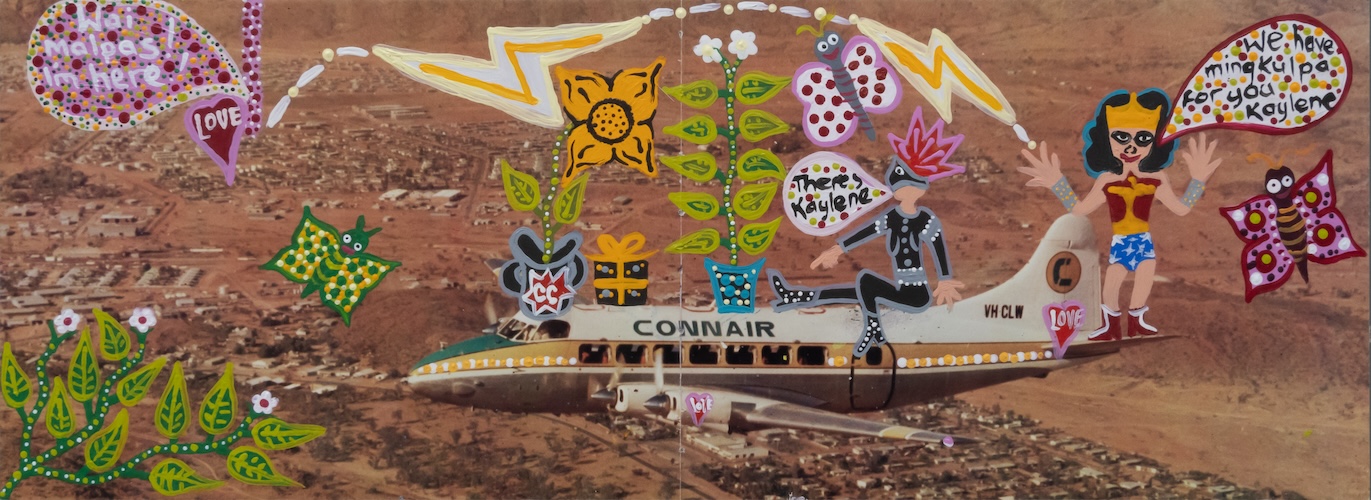
The joyous, detailed paintings of Whiskey incorporate pop culture references alongside traditional Anangu culture, in a playful interpretation of the artist’s personal experience of contemporary life in a remote Central Australian Indigenous community. They are widely recognised for their celebration of strong kungkas (women), featuring pop culture icons such as Dolly Parton, Tina Turner, Cher, and Wonder Woman, alongside herself, depicted in her new paintings on found book. Pop culture icons are frequently painted into sweeping remote desert community landscapes, interacting with native plants and wildlife and engaging in traditional Anangu activities like hunting, collecting bush tucker and cultivating mingkulpa (native tobacco plant). Whiskey defines the notion of sisterhood, and its fundamental impact on communal, social and physical health, not just in Indulkana, her home Country, but as a wider-reaching conceptual framework with sisterhood as the fabric of kinship and generosity.