Ames Yavuz is proud to announce Wall Works 2026, Kathy Temin’s first solo exhibition with the gallery.
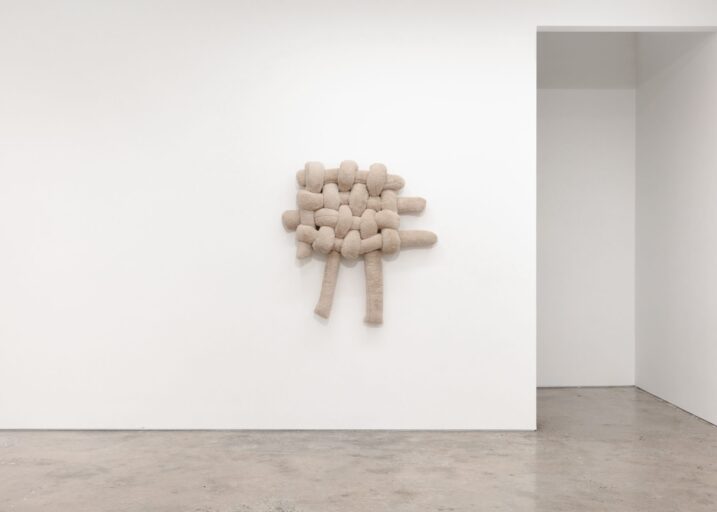
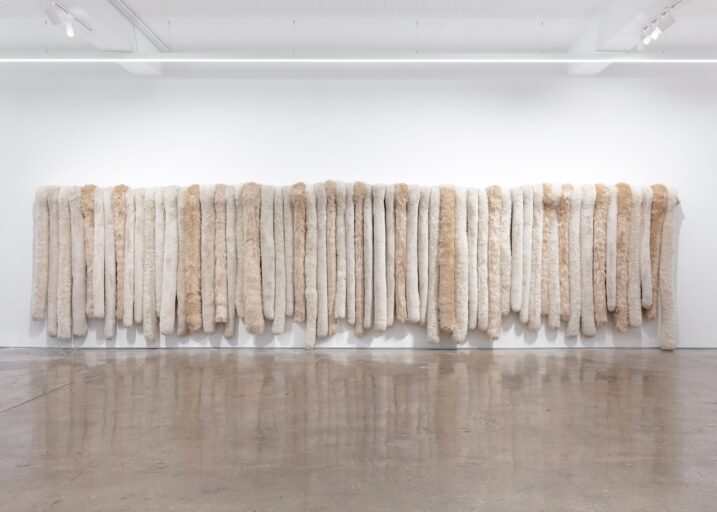
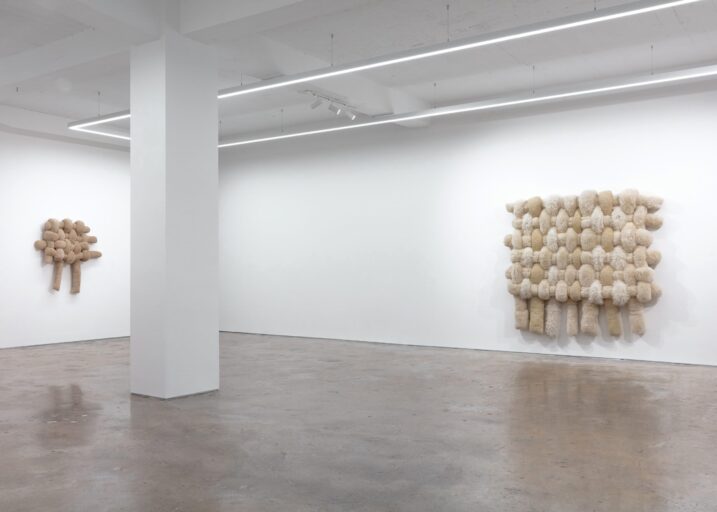
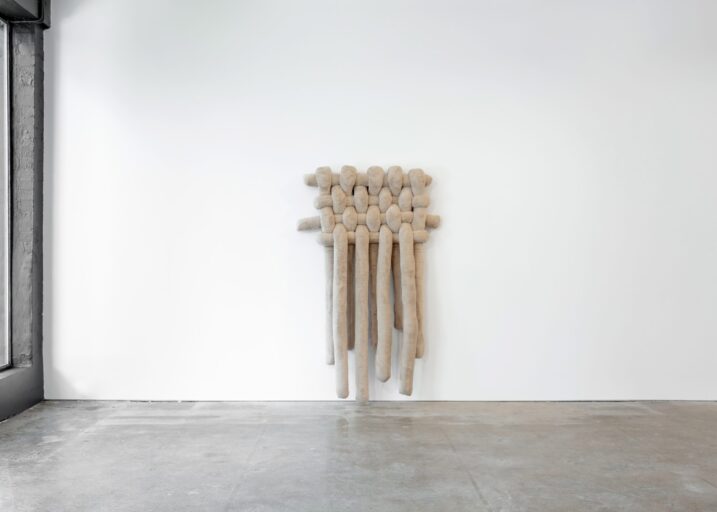
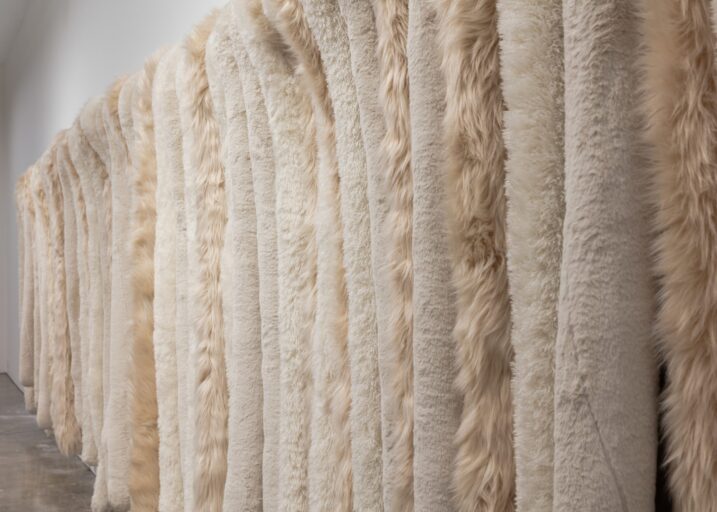
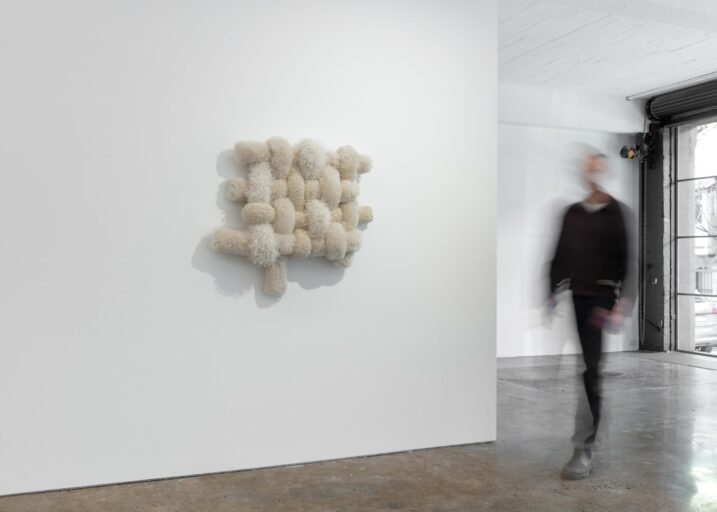
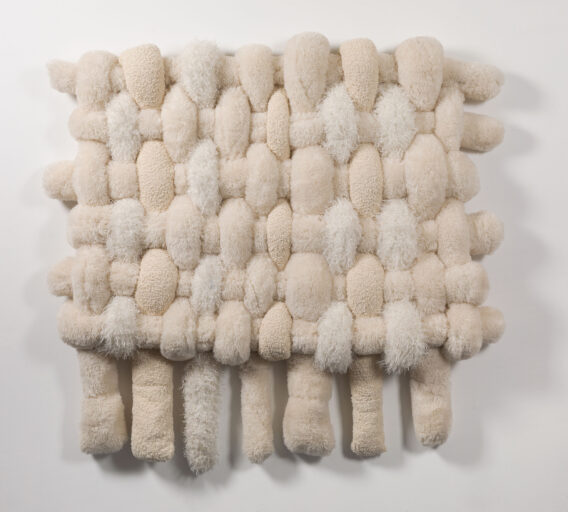
The exhibition will include her most ambitious wall work to date—spanning over seven metres—alongside a new body of intricately woven synthetic fur works, bringing the playful warmth of her signature material to the rigour and repetition of minimalism.
Accompanying the exhibition is an essay by writer Sebastian Goldspink:
A Soft Power
Like many of us, I have always been drawn to the soft impact each sculpture by Kathy Temin creates – more than ever, the imprint they leave behind sits so timely in our presence. Every encounter with a Temin sculpture triggers thoughts to swirl and cinematic landscapes to unfold, on repeat, leaving us breathless and contemplating this place’s recent history.
In Temin’s new series created for the exhibition Wall Works 2026 at Ames Yavuz in Surry Hills, one cannot ignore the importance and context of the geography the work is presented in – the swamps and waterways that flowed all the way to the harbour and existed long before the colonisation of Australia.
I think about early Sydney and the Jewish cemetery that was moved from Devonshire Street in preparation for the building of Central Station. I think about how Chinatown originally extended all the way up to Crown Street to house the waves of immigrants drawn to Australia for the gold rush. I think about the Rag Trade and the Jewish migrants who worked alongside the Chinese in buildings like the one that now houses Ames Yavuz. I then arrive at the families who came postwar. Post the horrors of the Shoah, including Temin’s family who ended up establishing a successful shirt factory in nearby Foveaux Street. I think about these families and what they survived. I think about their fortitude and the skills and attributes these eastern European garmentos brought to the new world and markets. They came with extraordinary work ethics but also innovation and colour that was transformative to the conservatism that defined Australian fashion previously. A flash of colour and style in marked contrast to the horrors that they had seen. A clarion call for humanity.
Wall Works 2026 is very much a continuation of Temin’s output since the early 1990s. She states:
“It’s a continuation of what I have always done, I’ve always worked with synthetic fur and tailoring. I’ve always been interested in synthetic fur because of the heightened emotions and its reference to soft toy imagery. How you can speak of extreme emotions or ideas without making it narratively based, but there are clues. It’s about feminism and this particular area of Surry Hills where my father worked. I hope there will be other readings for other people. I’m interested in that confusion.”
The forms reference this history of garment making and tailoring but in service of different ideas. Sleeves and tails and stitches. Creating a space around contemplation by subverting labour and traditional ‘women’s work’. The choice of synthetic fur is deliberate, creating a counter point of taste where high ideas are unpacked through kitschy materiality and childhood reassurance.
In speaking to Temin, one gets the sense that she likes the work to do the talking. She leaves space for the viewer to animate the works with their own histories beyond the artist’s intent. She is comfortable in ambiguity. And that checks out, our memories, fears, dreams and hopes are often ambiguous and slow. These works have a great visual but also tactile appeal. We are drawn to them but perhaps can’t articulate why. They are deeply considered but not prescriptive. I see these tails meandering down these back streets enveloping passers-by. Comforting them in a reassuring embrace. I imagine a parallel time when a weary garment worker in the 50s could look into the gallery window late at night and see these strange forms. To take comfort in them. To breathe, to dream. To know they have reached safety. A place of safety.