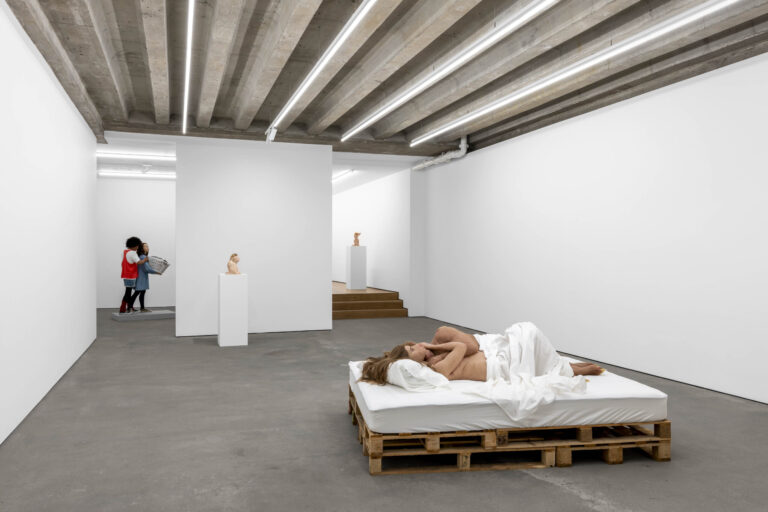
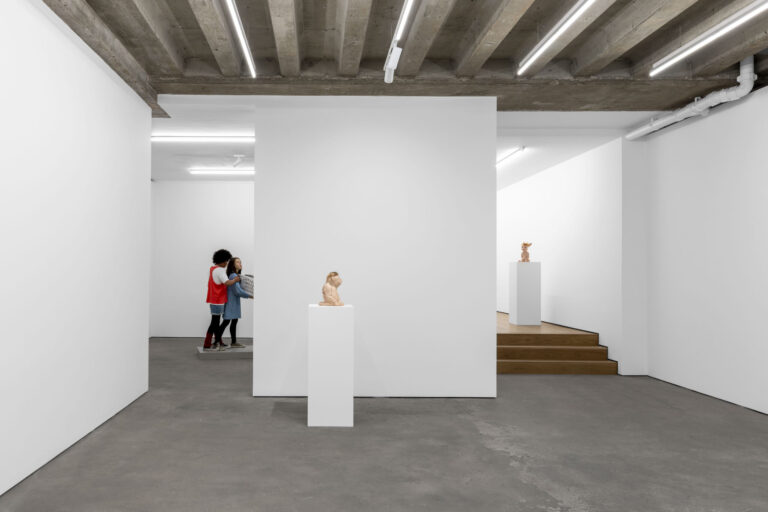
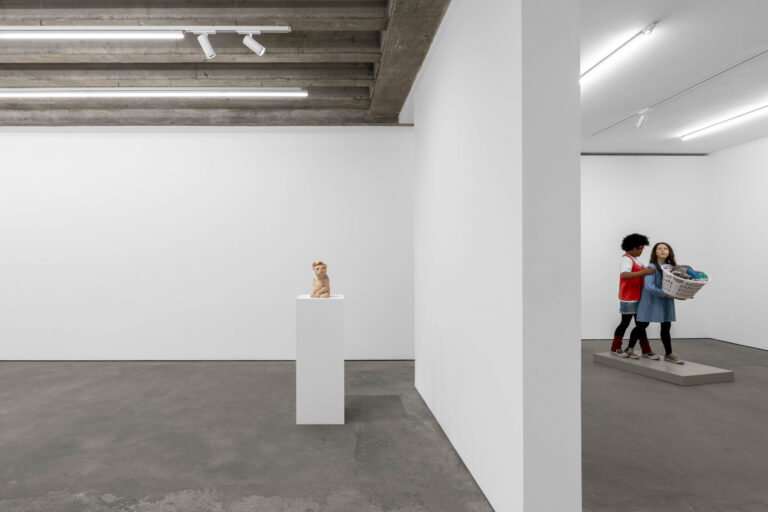
Ames Yavuz is pleased to present Holding Tight and Letting Go, an exhibition by Patricia Piccinini marking the artist’s first presentation with the gallery in London.
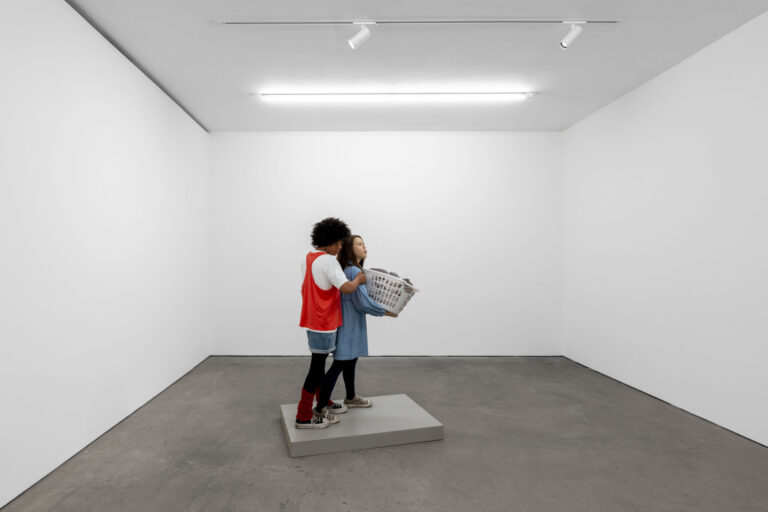
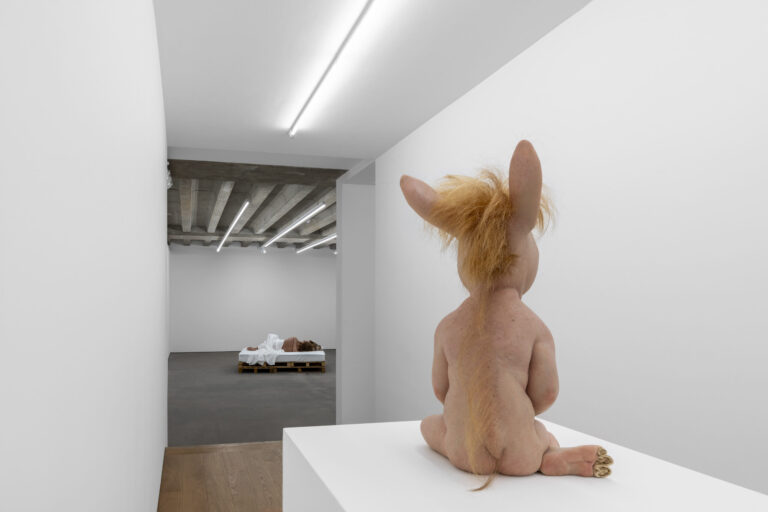
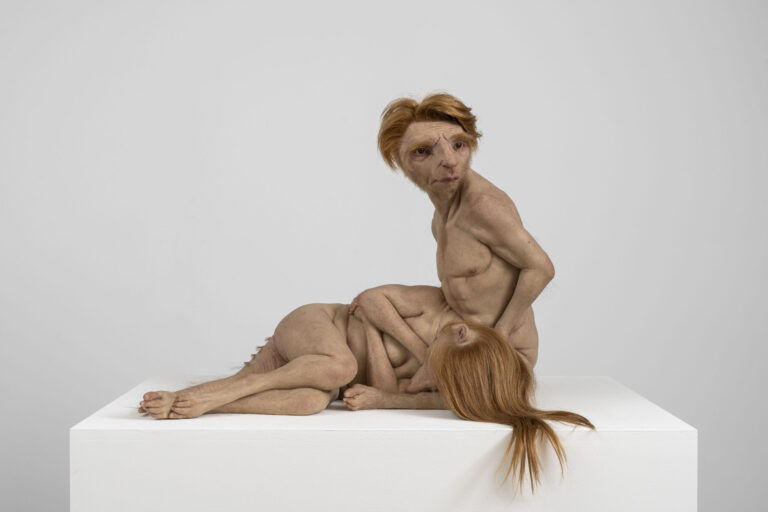
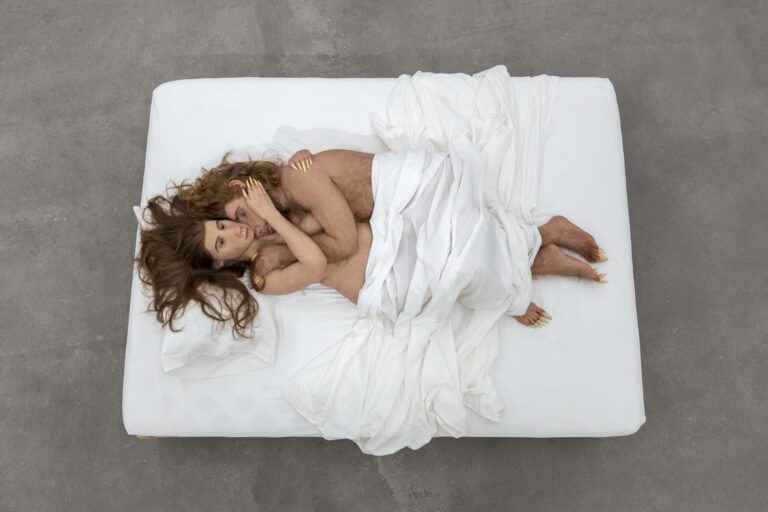
Holding Tight and Letting Go centres around the idea of kinship; how our human relationships with our family, friends, and the natural world, whether organic or artificial, intertwine. Kinship, in Piccinini’s work, is never straightforward. The Australian artist has built a practice around beings that exist at the edges of biological category. Her humanoid chimeras are rendered in silicone, fibreglass, and human hair with an anatomical fidelity that is, at once, disarming yet tender. Her figures trigger something almost parental; the soft skin, the realistic eyes, the rounded proportions read, perhaps against one’s better reasoning, as dependent.
Narratively, Holding Tight and Letting Go is grounded by the notion of empathy. The six works in this exhibition ask what it means to bear responsibility for the lives around us; those we have brought into the world, cared for (or even damaged), and those whom we have simply failed to recognize as worthy of care. The works themselves are informed by a myriad of memories, mythologies, and histories; Mary Shelley’s mythos of creation and abandonment, the human-caused extinction of the thylacine, the Australian bushfires of 2020, a Thomas Kennington painting from 1890, Piccinini’s own experience of motherhood—and yet, what the works do with this source material is transform it entirely. The references distill into a menagerie that is self-contained and anti-didactic, and the verdict of what to do with or how to feel about these creatures is very much always the viewer’s own.
Holding Tight and Letting Go holds two currents in tension. On one side sits what Piccinini calls ‘speculative optimism,’ an image-making practice that orients itself toward a possible, rather than a probable future, in which acts of care between humans and the natural world are presented not as they are, but as they could be. On the other side runs a quieter, more nuanced argument: that cruelty, tragedy, and violence, much like tenderness, can also be transmitted.
It is in this fluctuation between optimism and warning that the crux of Piccinini’s practice becomes most apparent; much like her figures hold the human and the animal in unresolved suspension, this concept refuses easy reconciliation. The discomfort and the tenderness are inseparable, as are nature versus nurture, as are human versus animal. Piccinini’s work exists, and flourishes, in the irreconcilable spaces between.