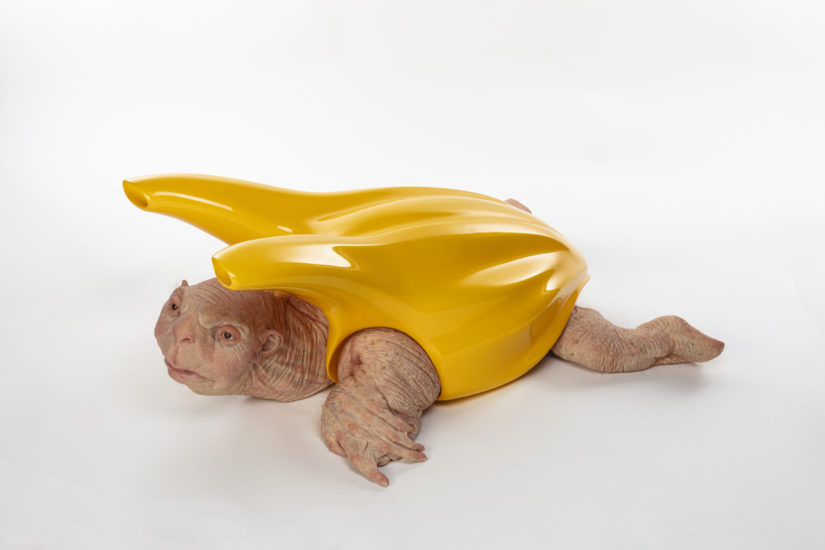
Patricia Piccinini (b. 1965, Freetown, Sierra Leone) is one of Australia’s most significant contemporary artists, whose practice taps into a fundamental human curiosity: who we are in the world, and how we as humans situate ourselves within our personal relationships and the natural world at large. Working both within and against the hyperrealist sculpture tradition, Piccinini has staked out territory that feels increasingly urgent. Her hybrid figures anticipate the transhumanist questions reshaping biotechnology, genetic science, and artificial intelligence: what forms will future life take, and, crucially, what might it mean to bear responsibility for the lives we create?
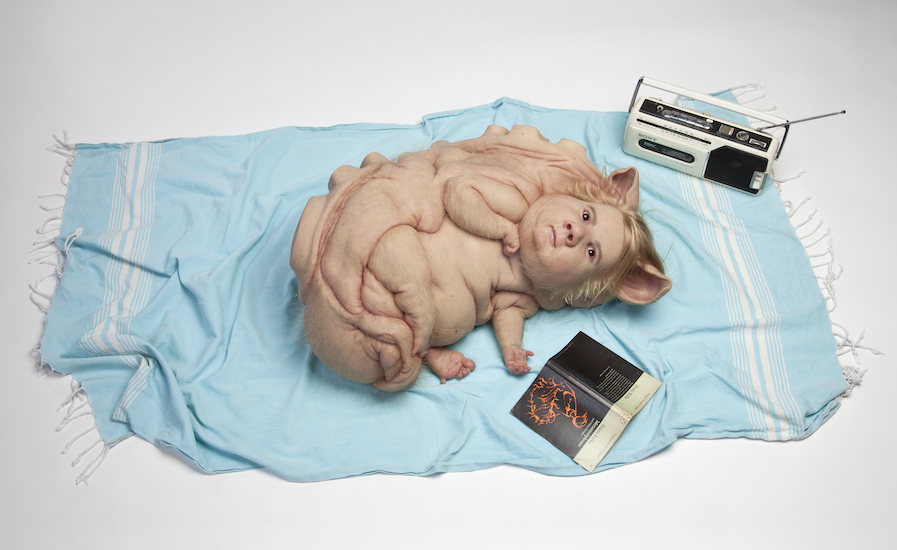
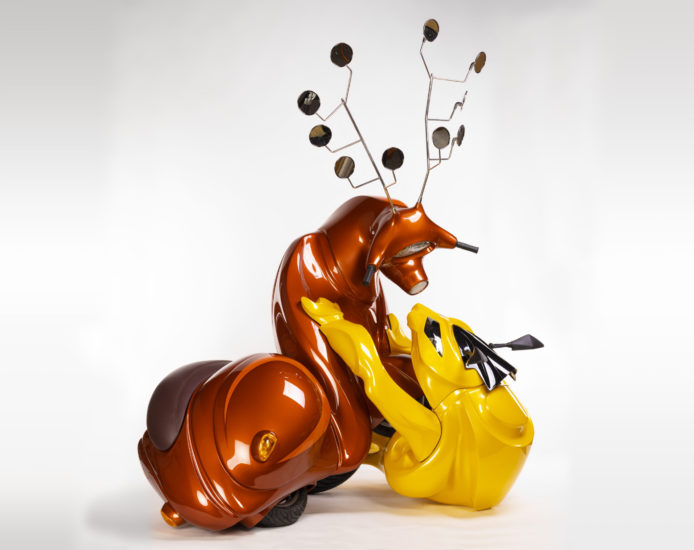
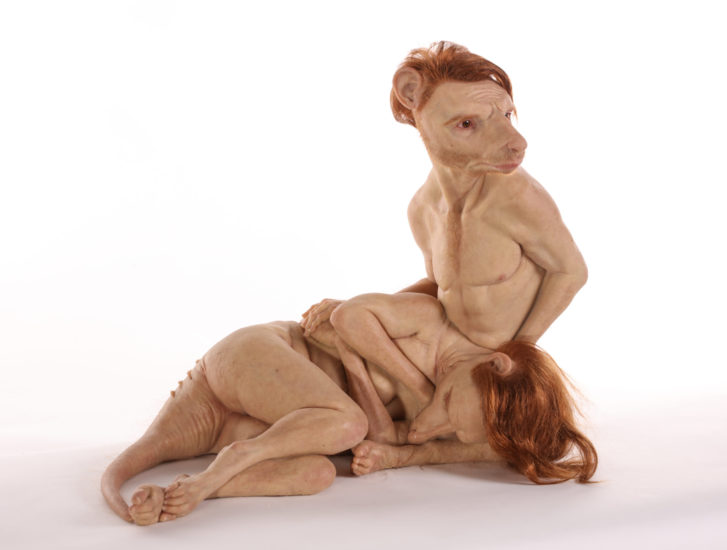
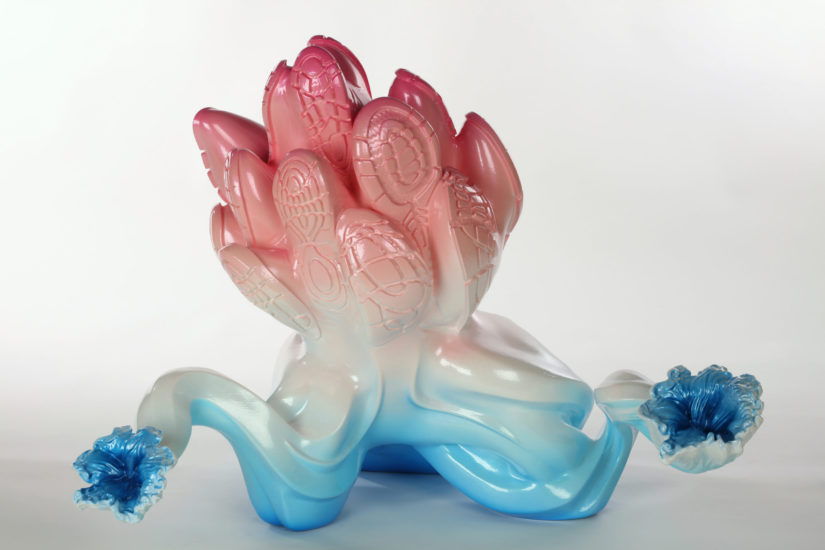
Piccinini is renowned for her sculptures of hybrid humanoid creatures; both human and animal, endearing and grotesque. She works meticulously with silicone, fibreglass, and human hair to render chimeric beings with soft skin and soulful eyes. Upon further inspection, animalistic features, maybe gnarled hooves, scaled limbs, or webbed extremities, become apparent. These details are rendered with an anatomical verity that pitch the work squarely into the uncanny valley—that is, the perceptual threshold at which not-quite-human likenesses trigger a sense of unease. Initially disarming, and even eliciting abjection, Piccinini’s works gradually evoke a softer, almost familiar quality of tenderness.
As the artist herself has noted, “many have looked at my practice in terms of science and technology, however, for me it is just as informed by Surrealism and mythology. My work aims to shift the way that people look at the world around them and question their assumptions about the relationships they have with the world.” Piccinini’s works ultimately pose the question of what obligations of care and recognition we bear toward the beings, whether created, evolved, or imagined, that we share the world with.
Representing Australia at the 2003 Venice Biennale, Piccinini debuted the critically acclaimed We are Family, a project that transformed the pavilion into a home of the future, expressing her fascination with the relationship between what is considered natural and what is considered artificial. Other major projects include the 2016 sculpture Graham, in which Piccinini was commissioned by the Transport Accident Commission in collaboration with medical experts that depicted a hypothetical human body re-engineered to survive high-speed collision, which became a global media phenomenon. Piccinini has exhibited widely across major international institutions, including the Victoria and Albert Museum, London, the Mori Art Museum, Tokyo, the Garage Museum of Contemporary Art, Moscow, and Museum MACAN, Jakarta, and has participated in numerous biennales, including Gwangju (2000), Berlin (2001), Liverpool (2002), Sydney (2002), and Chengdu (2026). Her solo survey exhibition ComCiência, which toured four cities across Brazil, was named the most popular contemporary art exhibition of 2016 by The Art Newspaper. Most recently, Care (Museum MACAN, 2024) and Metamorphosis (Kunsthal Rotterdam, 2023) have continued to extend her reach across Asia and Europe.